

Why every plant-based eater should pay attention; even when you feel healthy
Vitamin B12 is one of the most misunderstood nutrients, especially in the plant-based community. Many people still believe B12 “comes from meat,” but the truth is far more interesting and empowering for anyone eating plant based.
This article breaks down:
- Where B12 really comes from
- Why animals aren’t true sources
- The REAL plant-based sources
- The daily requirement
- What science says about its benefits
- Why deficiency has no early symptoms
- How B12 keeps your blood, nerves, brain, and DNA functioning
Let’s get into it.
Where does vitamin B12 actually come from? (hint: NOT animals)
Here’s the truth most people never hear:
Vitamin B12 is produced by bacteria, not animals, not plants, not humans.
B12 is synthesized by soil-based microorganisms that live in natural environments such as soil, rivers, and the digestive tracts of animals.
Animals only contain B12 because:
✔ They eat soil-covered plants
✔ They drink untreated water
✔ Their feed is fortified with synthetic B12
This is supported by research in the journal Nutrients and the American Journal of Clinical Nutrition, which confirms that ruminant animals obtain B12 from gut bacteria, not from the food itself.
So, the truth is:
B12 starts with bacteria. Animals are only “middlemen.”
Humans used to get B12 naturally the same way from unwashed vegetables and natural water sources, but modern sanitation removes most bacteria (good and bad), including B12-producing microbes.
This makes B12 a vitamin that requires intentional intake, especially on a plant-based diet.
Are there plant-based sources of vitamin B12?
Yes, but they fall into two groups:
1. Reliable Plant-Based Sources (backed by science):
These contain B12 because they are fortified, meaning B12 is added to them:
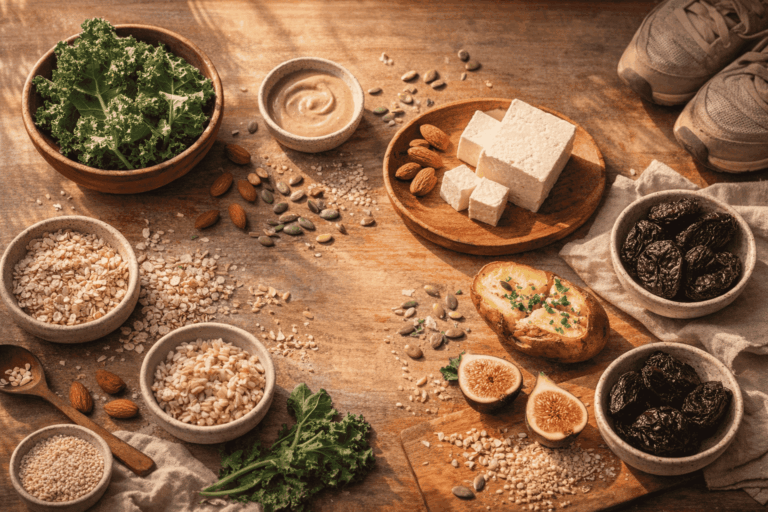
- Nutritional yeast (fortified)
- Plant milks (soy, almond, oat – fortified)
- Breakfast cereals (fortified)
- B12-fortified vegan meats
- Some vegan yogurts
These are recognized by Harvard Health and The National Institutes of Health (NIH) as legitimate B12 sources.
2. Unreliable Natural Sources
Often claimed…but scientifically proven NOT reliable:
- Seaweed (nori, dulse); contains analogs, not active B12
- Spirulina: contains pseudo-B12 that the body cannot use
- Fermented foods; inconsistent, not dependable
Studies published in the journal Plant Foods for Human Nutrition show these foods contain B12-like compounds that can block real B12 absorption.
Why vitamin B12 matters (benefits backed by research)
Scientific literature: including journals like Nutrients, AJCN, and Mayo Clinic Proceedings shows that B12 is essential for:
✔ Formation of red blood cells
Prevents anemia, which causes weakness and fatigue.
✔ Nerve protection
B12 builds myelin, the protective covering around nerves.
Low B12 slowly damages nerves and once nerves are damaged, recovery is slow.
✔ Brain function
Supports memory, focus, and cognitive performance.
Low B12 is linked to brain fog and memory problems.
✔ DNA synthesis
Every cell in your body requires B12 to divide properly.
✔ Energy metabolism
Helps convert food into cellular energy.
✔ Methylation
A crucial process affecting hormones, detoxification, and mood.
This is why B12 deficiency is called “the silent deficiency.” You don’t feel it until the damage has already begun.
The scary part: Early B12 deficiency has no symptoms
Scientific reviews in Nutrients and Frontiers in Neurology show that:
👉 B12 deficiency can exist for YEARS without symptoms.
👉 Fatigue, irritability, brain fog, or tingling appear only when levels get dangerously low.
👉 Even people who “feel healthy” can have low B12, especially on plant-based diets.
This is because the body stores B12 in the liver and slowly uses it. By the time symptoms appear, the damage may have progressed.
How Much Vitamin B12 Do You Need Daily?
According to the National Institutes of Health (NIH):
Adults need 2.4 micrograms per day (Needs increase for pregnancy and breastfeeding.)
The good news: this is EASY to meet with fortified foods or a reliable plant-based supplement.
How plant-based eaters can easily maintain healthy B12 levels
Choose one of these simple methods:
✔ Method 1: Fortified foods
Eat 2–3 servings per day from:
- Nutritional yeast
- Fortified plant milk
- Fortified cereal
✔ Method 2: Weekly B12 intake
Some people use a weekly B12 source depending on health advice.
✔ Method 3: Daily plant-based multivitamin with B12
(No supplements recommended unless the user’s health provider advises.)
The Bottom Line
Vitamin B12 does not belong to meat it belongs to bacteria, and humans have always relied on microbes for it.
Today, we must be intentional about B12 intake, especially on a plant-based diet. It fuels your blood, brain, energy, hormones, and DNA and deficiency gives no early warning signs.
If you’re plant-based or transitioning, understanding B12 is one of the most empowering steps you can take for long-term health.