
How to Stop Energy Crashes and Cravings
Energy crashes after lunch, sudden cravings for sugar, and an afternoon fog can disrupt your focus and mood. Often, these symptoms are driven by fluctuations in blood glucose. While plant-based diets are typically rich in fiber and nutrients that support metabolic health, it is still possible to experience spikes and crashes if the balance of carbohydrates, protein, and fats is off.
Understanding how to manage your blood sugar on a plant-based diet is key to maintaining steady energy, stabilizing your mood, and reducing hunger between meals. This article explores the principles of blood sugar balance and provides practical strategies to keep your glucose levels stable throughout the day.
Understanding Blood Sugar and the Plant-Based Context
When you eat carbohydrates, your body breaks them down into glucose, which enters the bloodstream. Your pancreas releases insulin to help cells absorb this glucose for energy. However, the type and amount of carbohydrates you consume determine how sharply your blood sugar rises and falls.
A plant-based diet provides fiber, which slows the absorption of sugar into the bloodstream. However, not all plant foods act the same. A refined carbohydrate like white bread causes a rapid spike, while a whole grain like quinoa causes a slower, more gradual rise. The goal is to choose foods with a low glycemic load and to combine carbohydrates with protein and healthy fats to slow digestion further.
Key Principles for Blood Sugar Balance
1. Prioritize Fiber-Rich Carbohydrates
Fiber acts as a physical barrier that slows the movement of sugar from the stomach into the bloodstream. Focus on whole grains, legumes, fruits, and vegetables rather than refined grains and added sugars.
2. Include Plant Protein at Every Meal
Protein slows gastric emptying, the process by which food leaves your stomach. By including beans, lentils, tofu, tempeh, or seitan at breakfast, lunch, and dinner, you blunt the impact of carbohydrates on your blood sugar.
3. Add Healthy Fats
Monounsaturated and polyunsaturated fats delay stomach emptying and increase satiety. Incorporating sources like avocados, nuts, seeds, and olive oil helps smooth out energy levels.
4. The Plate Method
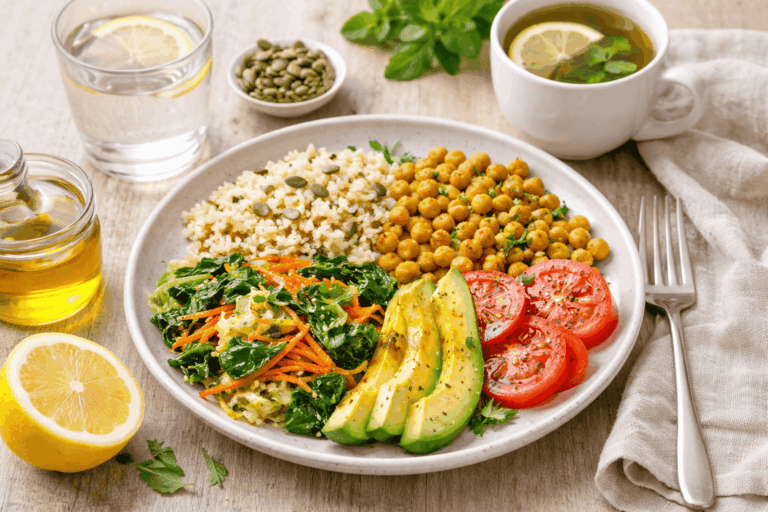
A simple way to visualize a blood sugar-friendly meal is to divide your plate:
- 1/2 of the plate: Non-starchy vegetables (leafy greens, broccoli, peppers).
- 1/4 of the plate: Carbohydrate sources (whole grains, starchy vegetables).
- 1/4 of the plate: Plant protein (beans, lentils, tofu, nuts).
6 easy habits that balance blood sugar fast (plant-based)
These are simple, but they work.
1) Eat breakfast that includes protein
If your breakfast is only tea and bread, you’ll likely crave snacks later.
Better options:
- Beans + toast
- Peanut butter + banana on whole grain bread
- Tofu scramble + vegetables
- Leftover rice + beans + veggies
Even a small protein portion changes everything.
2) Don’t start the day with sugar + caffeine only
If you drink strong coffee on an empty stomach, it can increase stress hormones and make cravings worse later.
Try:
- eat first, then have your coffee/tea
- or choose a gentler drink like herbal tea early morning
3) Add vegetables to meals you normally wouldn’t
This is the easiest upgrade.
Examples:
- add cabbage + carrots to rice
- add spinach to pasta
- add tomatoes + onions to beans
- add cucumber + greens to sandwiches
Vegetables slow digestion and support steadier glucose.
4) Build snacks that have 2 parts, not 1
Instead of a snack that’s only carbs…
Try this formula:
Fruit or carbs + protein or fat
Snack combos:
- Banana + peanut butter
- Apple + roasted peanuts
- Carrots + hummus
- Popcorn + sunflower seeds
- Whole grain crackers + bean dip
This reduces the “snack… then snack again” cycle.
5) Eat at consistent times (even if meals are simple)
Skipping meals often leads to overeating later.
You don’t need a strict schedule, just a rhythm:
- Breakfast
- Lunch
- optional snack
- Dinner
Your body loves predictability.
6) Don’t fear carbs, just “dress them up”
Carbs become blood-sugar friendly when you pair them well.
Example:
- Plain rice: rice + beans + vegetables + oil/seeds
- Plain bread: bread + hummus + cucumber + avocado
- Plain potatoes: potatoes + bean stew + greens
Three Plant-Based Recipes for Stable Energy
These recipes are designed to be high in fiber, protein, and healthy fats to prevent energy crashes. They use globally accessible, budget-friendly ingredients.
1. Turmeric Tofu Scramble (Breakfast)
A savory, protein-packed alternative to traditional breakfasts that provides sustained energy without the sugar crash.
Ingredients (serves 1-2)
- 1 block of firm tofu, drained and pressed
- 1 tbsp olive oil or coconut oil
- 1/2 tsp turmeric powder
- 1/2 tsp cumin
- 1/4 tsp black pepper (enhances turmeric absorption)
- 1/4 cup spinach, chopped
- 1/4 cup mushrooms, sliced
- 1/4 avocado, sliced (optional)
- Salt and pepper to taste
Instructions
- Crumble the pressed tofu into a bowl. Add turmeric, cumin, black pepper, salt, and pepper. Mix well until the tofu is evenly colored.
- Heat the oil in a skillet over medium heat. Add the mushrooms and sauté for 3 minutes until soft.
- Add the crumbled tofu mixture to the skillet. Cook for 5-7 minutes, stirring frequently, until the tofu is lightly browned.
- Stir in the spinach and cook for another 1-2 minutes until wilted.
- Serve warm, topped with sliced avocado if desired.
Why it works: Tofu provides complete plant protein, while the fiber from the vegetables and healthy fats from the avocado help slow glucose absorption.
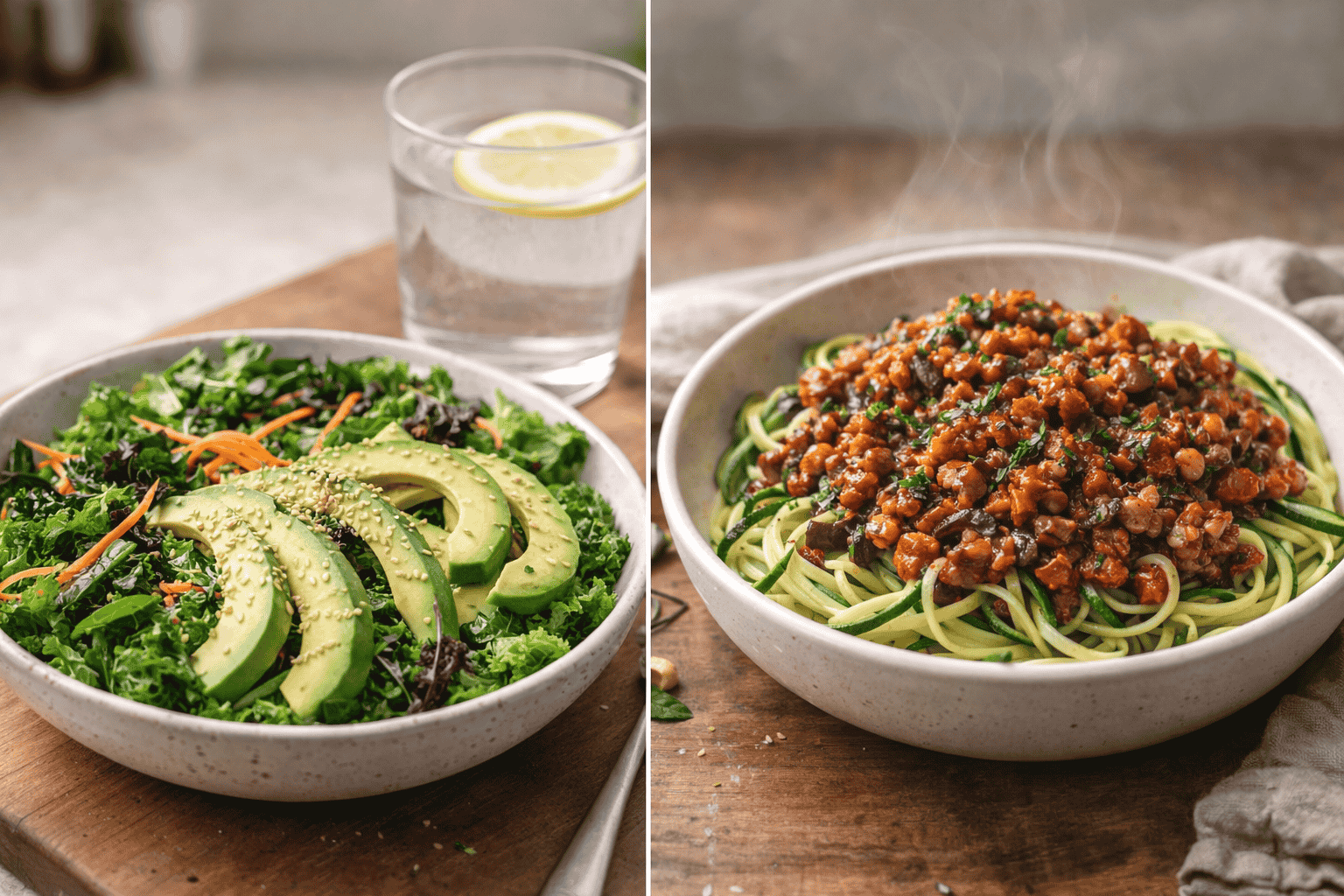
2. Green Goddess Salad with Hemp Seeds (Lunch)
A refreshing, crunchy salad that delivers essential omega-3 fatty acids and magnesium, both of which play a role in insulin sensitivity.
Ingredients (serves 1)
- 2 cups mixed greens (spinach, arugula, or lettuce)
- 1/2 cup cherry tomatoes, halved
- 1/4 cup cucumber, diced
- 1/4 avocado, cubed
- 2 tbsp hemp seeds (or sunflower seeds)
- 1 tbsp olive oil
- 1 tbsp lemon juice
- Pinch of salt and oregano
Instructions
- Arrange the mixed greens in a bowl.
- Top with cherry tomatoes, cucumber, and avocado.
- In a small bowl, whisk together the olive oil, lemon juice, salt, and oregano to make the dressing.
- Drizzle the dressing over the salad and sprinkle with hemp seeds just before serving.
Why it works: Hemp seeds are a powerhouse of plant-based protein and healthy fats. The high water and fiber content of the vegetables also aid in stabilizing blood sugar.
3. Mushroom and Walnut “Bolognese” (Dinner)
A hearty, umami-rich pasta alternative that is rich in fiber and healthy fats, keeping you full until bedtime.
Ingredients (serves 2)
- 1 cup mushrooms (cremini or button), chopped
- 1/2 cup walnuts, roughly chopped
- 1/2 can of black beans, rinsed and drained
- 1/2 cup tomato sauce or crushed tomatoes
- 1/2 tsp dried oregano
- 1/2 tsp garlic powder
- 1 tbsp olive oil
- 1 zucchini, spiralized (optional) or served over whole wheat pasta
Instructions
- Heat the olive oil in a skillet over medium heat. Add the mushrooms and cook for 5 minutes until browned.
- Add the walnuts and black beans to the skillet. Cook for another 3 minutes, breaking up the beans slightly.
- Stir in the tomato sauce, oregano, and garlic powder. Simmer for 10 minutes to allow the flavors to meld.
- Serve hot over zucchini noodles or a small portion of whole wheat pasta.
Why it works: The combination of walnuts and mushrooms provides a savory texture similar to meat while offering healthy fats and fiber. Black beans add a significant protein boost.
Practical Tips for Everyday Balance
- Stay Hydrated: Dehydration can make blood sugar appear higher on tests and may worsen fatigue. Drink water throughout the day.
- Watch Fruit Portions: While fruit is healthy, its natural sugars can still impact blood sugar. Stick to whole fruits rather than juices and be mindful of portion sizes.
- Mind Your Timing: Try to eat regular meals rather than skipping breakfast and eating a large meal late at night. This helps keep insulin levels steady.
- Exercise After Meals: A short walk after eating can help your muscles absorb glucose more efficiently, preventing it from lingering in the bloodstream.
Balancing blood sugar on a plant-based diet is not about restriction; it is about strategy. By choosing complex carbohydrates, incorporating plant proteins, and adding healthy fats, you can transform your meals into stable sources of energy. This approach reduces cravings, improves mental clarity, and supports long-term metabolic health.