
Plant-Rich and Budget Friendly
When life feels too loud and your mind will not slow down, your body is often speaking through chemistry. One of the key messengers is cortisol, commonly called the stress hormone. While cortisol is not your enemy, constantly elevated levels can leave you feeling wired, tired, anxious, and drained.
Food will not erase stress by itself, but what you put on your plate can help your body move out of emergency mode and back toward balance. That is where the idea of a Cortisol Reset Plate comes in.
This article walks you through what cortisol is, how food affects it, and how to build simple, budget friendly meals that support calmer energy and clearer focus.
What exactly is cortisol?
Cortisol is a hormone made by your adrenal glands. It helps you:
- Wake up in the morning
- Respond to stress
- Regulate blood sugar
- Reduce or control inflammation
In short bursts, cortisol is helpful. It prepares you to react and adapt. The trouble begins when stress is constant and your body never gets the signal that it is safe again.
Signs that your stress system might be overworked can include:
- Feeling tired but wired
- Craving sugar or salty snacks
- Difficulty falling or staying asleep
- Midday energy crashes
- Irritability or brain fog
Food is only one piece of the puzzle, but it is a powerful one that you can influence several times a day.
How food affects cortisol
Your stress response is closely tied to your blood sugar, inflammation levels, and gut health. Certain eating patterns can fan the flames of stress, while others help your system settle.
Eating patterns that may raise cortisol
- Skipping meals then overeating later
- Very high sugar snacks and drinks
- A lot of ultra processed foods
- Too much caffeine, especially on an empty stomach
- Heavy late night eating
These patterns can cause sharp spikes and drops in blood sugar. Your body sees those swings as a mini emergency and can release more cortisol to correct them.
Eating patterns that help calm cortisol
- Regular meals with balanced plant protein, fiber, and healthy fats
- Plenty of colorful vegetables and fruit
- Mostly whole grains instead of refined ones
- Simple, steady hydration
- Gentle use of caffeine, ideally after breakfast, not before it
The goal is stability. When your blood sugar and digestion are steadier, your brain receives fewer stress signals.
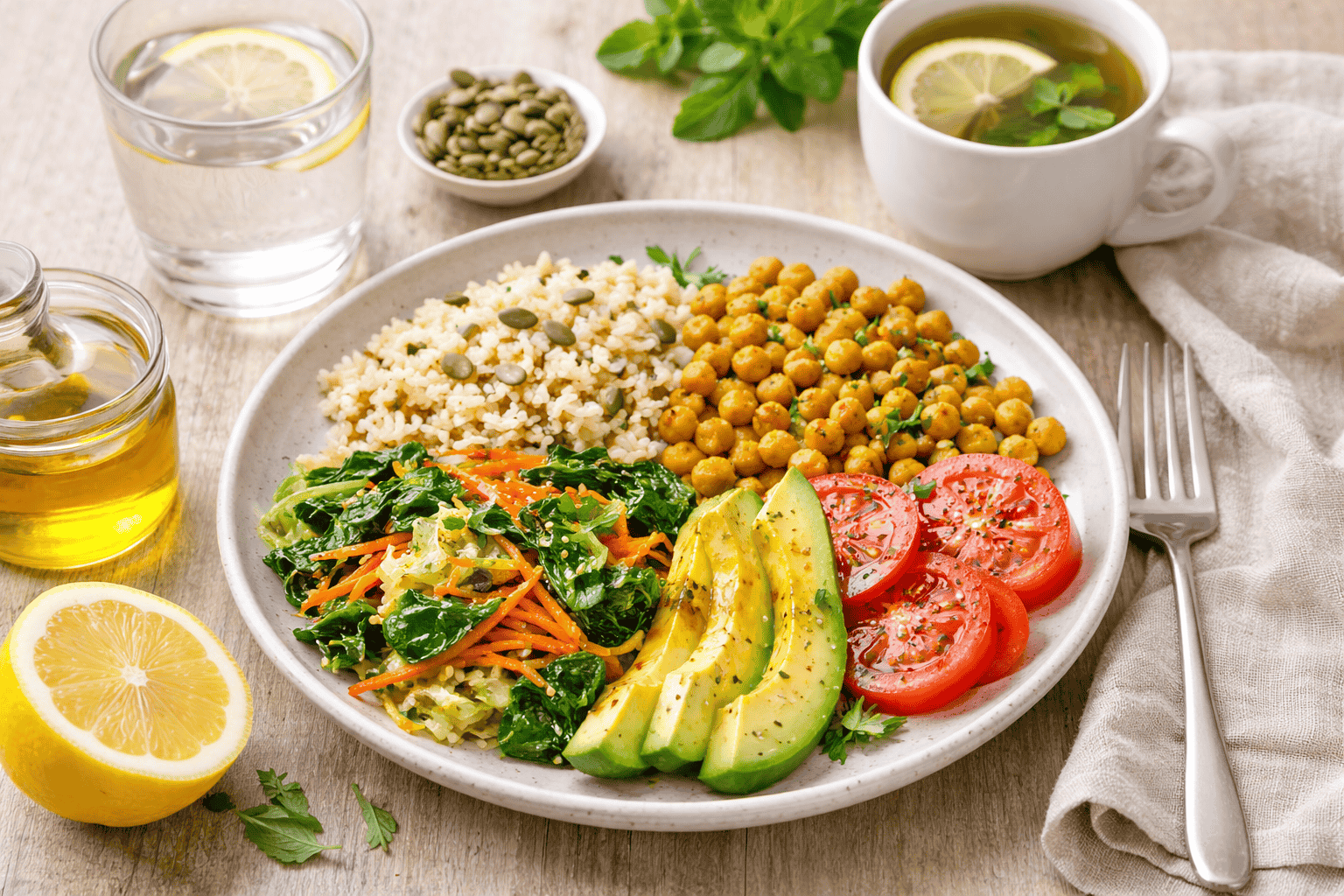
The Cortisol Reset Plate: A simple framework
Think less about strict rules and more about a calming pattern for your meals. Picture your plate divided into five supportive sections.
1. Slow-release carbohydrates (about 1 quarter of your plate)
These provide steady energy instead of sharp peaks and crashes.
Budget friendly options:
- Brown rice or white rice cooked and cooled then gently reheated
- Whole grain bread or flatbread
- Barley, millet, or whole wheat couscous
- Potatoes with the skin, in moderation
2. Satisfying plant protein (about 1 quarter of your plate)
Protein helps keep you full, supports muscle and immune health, and steadies blood sugar.
Wallet friendly choices:
- Beans, chickpeas, or lentils
- Split peas or green grams
- Tofu or tempeh (if available)
- Groundnuts/peanuts or peanut butter
- Hummus or bean spreads
3. Colorful vegetables and fruit (about half your plate)
These bring fiber, vitamins, minerals, and antioxidants that help protect the brain from oxidative stress and support gut health.
Easy options:
- Carrots, cabbage, spinach, kale, tomatoes, bell peppers
- Frozen mixed vegetables
- Apples, oranges, bananas, grapes, seasonal local fruit
4. Healthy fats (a small but important portion)
Healthy fats help with hormone production, brain function, and satiety.
Affordable sources:
- Olive oil or canola oil
- Ground flaxseed or chia seeds
- Sunflower seeds, pumpkin seeds, or peanuts
- Avocado, where available and affordable
5. Calming minerals (the stress support boost)
Minerals are a quiet but powerful part of stress nutrition. When you are under pressure, your body uses up certain minerals faster, and low levels can make you feel more tense, tired, and emotionally reactive.
Focus on minerals that support the nervous system:
- Magnesium (calming mineral): leafy greens, peanuts, seeds, whole grains
- Potassium (steady energy + balance): bananas, beans, potatoes, greens
- Zinc (stress resilience): beans, chickpeas, seeds, whole grains
A simple way to include this is to add one mineral-rich food daily, like a spoon of seeds, a handful of greens, or a serving of beans.
Mini mineral boost box (add-ons for calm energy)
If your plate feels “almost complete,” add one of these small mineral boosts:
Pick 1–2 per meal:
- 1 tablespoon pumpkin seeds (magnesium + zinc)
- 1 tablespoon ground flaxseed (magnesium + healthy fats)
- 1 tablespoon chia seeds (magnesium + steady energy support)
- A handful of spinach or sukuma wiki (magnesium + potassium)
- 1 banana on the side (potassium + gentle carbs)
- 2 tablespoons peanut butter or a handful of groundnuts (magnesium + satisfying fats)
- ½ cup beans or lentils added into any meal (potassium + zinc + fiber)
Small additions like these can make your meal more calming without needing a full recipe.
Three simple Cortisol Reset recipes
These recipes use ingredients that are commonly available and budget friendly. Adjust quantities to your appetite and energy needs.
1. Calm Energy Rice and Greens Bowl (Plant-Based)
This is a gentle, any time meal for days when your nerves feel frayed.
Ingredients (serves 1)
- 1 cup cooked rice (brown or white)
- ¾ to 1 cup cooked beans or lentils (or chickpeas)
- 1 cup leafy greens or cabbage, shredded (spinach, kale, sukuma wiki, or local equivalent)
- 1 small carrot, grated or thinly sliced
- 1 tablespoon olive oil or other cooking oil
- 1 teaspoon soy sauce or a pinch of salt
- Optional: squeeze of lemon or lime, chopped herbs, black pepper
Directions
- Warm the cooked rice in a pan or microwave and place it in a bowl.
- In a pan, heat half the oil, add the greens and carrot, and sauté for 2 to 3 minutes until just tender. Season lightly with salt or soy sauce.
- Add the beans or lentils and warm through for 1 to 2 minutes.
- Spoon the vegetables and beans over the rice.
- Finish with pepper, lemon or lime, and any herbs you have.
Why it helps
- Rice provides steady carbohydrates for calm energy.
- Beans or lentils supply plant protein and fiber that stabilize blood sugar.
- Greens and carrots add antioxidants and minerals that support the nervous system.
2. Chickpea Crunch Salad Plate
This plate is great for lunch when you feel stressed and tempted to snack all afternoon.
Ingredients (serves 1)
- 1 cup cooked chickpeas (canned or home cooked, rinsed)
- 1 cup chopped vegetables: cucumber, tomato, carrot, or cabbage
- 1 small handful fresh herbs if available (parsley, coriander, mint)
- 1 to 2 tablespoons sunflower seeds or peanuts
- 1 tablespoon olive oil or another mild oil
- Juice of half a lemon or lime, or 1 tablespoon vinegar
- Pinch of salt and black pepper
- 1 slice whole grain bread or a small serving of cooked grain on the side
Directions
- In a bowl, combine chickpeas, chopped vegetables, herbs, and seeds or peanuts.
- In a small cup, whisk together oil, lemon or lime juice or vinegar, salt, and pepper.
- Pour the dressing over the salad and toss gently.
- Serve with whole grain bread or another grain on the side.
Why it helps
- Chickpeas give protein and fiber that keep you full and reduce cravings.
- Seeds or peanuts provide healthy fats and calming minerals like magnesium.
- Crunchy vegetables support gut health and steady digestion.
3. Evening Wind Down Stew with Beans and Vegetables
A light but nourishing dinner can help your body understand that it is time to shift out of high alert.
Ingredients (serves 2)
- 1 tablespoon oil
- 1 small onion, finely chopped
- 1 clove garlic, minced (optional)
- 1 carrot, diced
- 1 cup chopped vegetables such as zucchini, green beans, cabbage, or local seasonal options
- 1 cup cooked beans (any kind you have: black beans, kidney beans, white beans)
- 2 cups vegetable broth or water
- 1 teaspoon dried herbs (such as mixed herbs, thyme, or oregano)
- Salt and pepper to taste
- Optional: 1 small potato, diced, or 1 handful cooked grain added for extra heartiness
Directions
- In a pot, heat the oil on medium. Add onion and cook until soft. Add garlic if using and stir for 30 seconds.
- Add carrot and other vegetables and cook for 3 to 4 minutes.
- Add beans, broth or water, herbs, and optional potato or grain.
- Bring to a gentle boil, then reduce heat and simmer for 15 to 20 minutes.
- Season with salt and pepper to taste. Serve warm.
Why it helps
- Warm, gently cooked food is often easier to digest in the evening.
- Beans provide plant protein and fiber to stabilize blood sugar through the night.
- Mixed vegetables bring antioxidants that support recovery from daily stress.
Drinks that support a calmer stress response
Hydration helps your body regulate cortisol, digestion, and circulation. When you are stressed, it is easy to live on coffee and forget water.
Supportive choices:
- Plain water, flavored with lemon, orange slices, or cucumber if you like.
- Herbal teas such as chamomile, mint, lemon balm, or rooibos.
- Lightly brewed green tea earlier in the day.
Consider limiting:
- Large amounts of coffee, especially before eating.
- Sugary energy drinks.
- Alcohol in the evening, which can disrupt sleep.
Foods that may be less helpful when you are stressed
You do not need a perfect diet, and no single food will ruin your progress. At the same time, being mindful of certain patterns can help.
Try to limit:
- Sugary drinks and sweets as your main response to stress.
- Very salty fast food eaten in a rush.
- Highly processed snacks that leave you hungry soon after.
- Frequent late night heavy meals.
Instead, aim to pair treats with a more balanced base. For example, if you want chocolate, enjoy a small portion after a meal that follows the Cortisol Reset Plate pattern.
A simple daily Cortisol Reset routine
If you want a practical starting point, use this structure and adjust to your culture, preferences, and schedule.
- Morning: Breakfast that includes plant protein and some color, such as the rice, beans, and greens bowl or whole grain toast with a bean spread and vegetables. Have coffee after eating, not before.
- Midday: A plate with a quarter grains, a quarter plant protein, and half vegetables or salad, such as the chickpea crunch salad with bread.
- Afternoon snack: A piece of fruit and a small handful of nuts or seeds, or a smoothie with banana + spinach + flax.
- Evening: A warm, simple meal like the bean and vegetable stew, with a focus on comfort and moderation.
- Hydration: Water throughout the day, and herbal tea in the evening to signal wind down.
The key is consistency. Your stress system responds best to predictable, gentle care.
A brief note on expectations and medical care
Food can support your nervous system, but it does not replace professional help. If you experience:
- Ongoing anxiety or low mood
- Unintentional weight changes
- Persistent sleep problems
- Heart palpitations or dizziness
consider speaking with a healthcare professional. Nutrition is one part of a holistic plan for managing stress, along with sleep, movement, social support, and, when needed, therapy or medication.
The Cortisol Reset Plate is not a strict diet. It is a gentle guide to help you answer a simple question on stressful days:
“What can I put on my plate that makes my body feel a little safer and more supported?”
By choosing steady carbohydrates, satisfying plant protein, colorful plants, healthy fats, and calming minerals, you give your body the materials it needs to respond to stress and then return toward balance. Over time, these small, repeated choices can make your days feel more grounded, even when life is not.