
Did you know that your gut is home to trillions of microorganisms, collectively known as the gut microbiome, which play a crucial role in your digestion, immunity, and overall well-being? Maintaining a healthy gut isn’t just about avoiding stomach issues, it’s about nurturing a complex ecosystem that impacts everything from energy levels to mood. Two key players in this ecosystem are probiotics and prebiotics. While they sound similar, they perform very different roles, and together they create a harmonious environment in your digestive system.
What Are Probiotics?
Probiotics are live beneficial bacteria that naturally reside in your gut. They are responsible for keeping harmful bacteria in check, supporting digestion, and even boosting immunity. You can think of probiotics as the “good soldiers” that maintain order in your intestinal world.
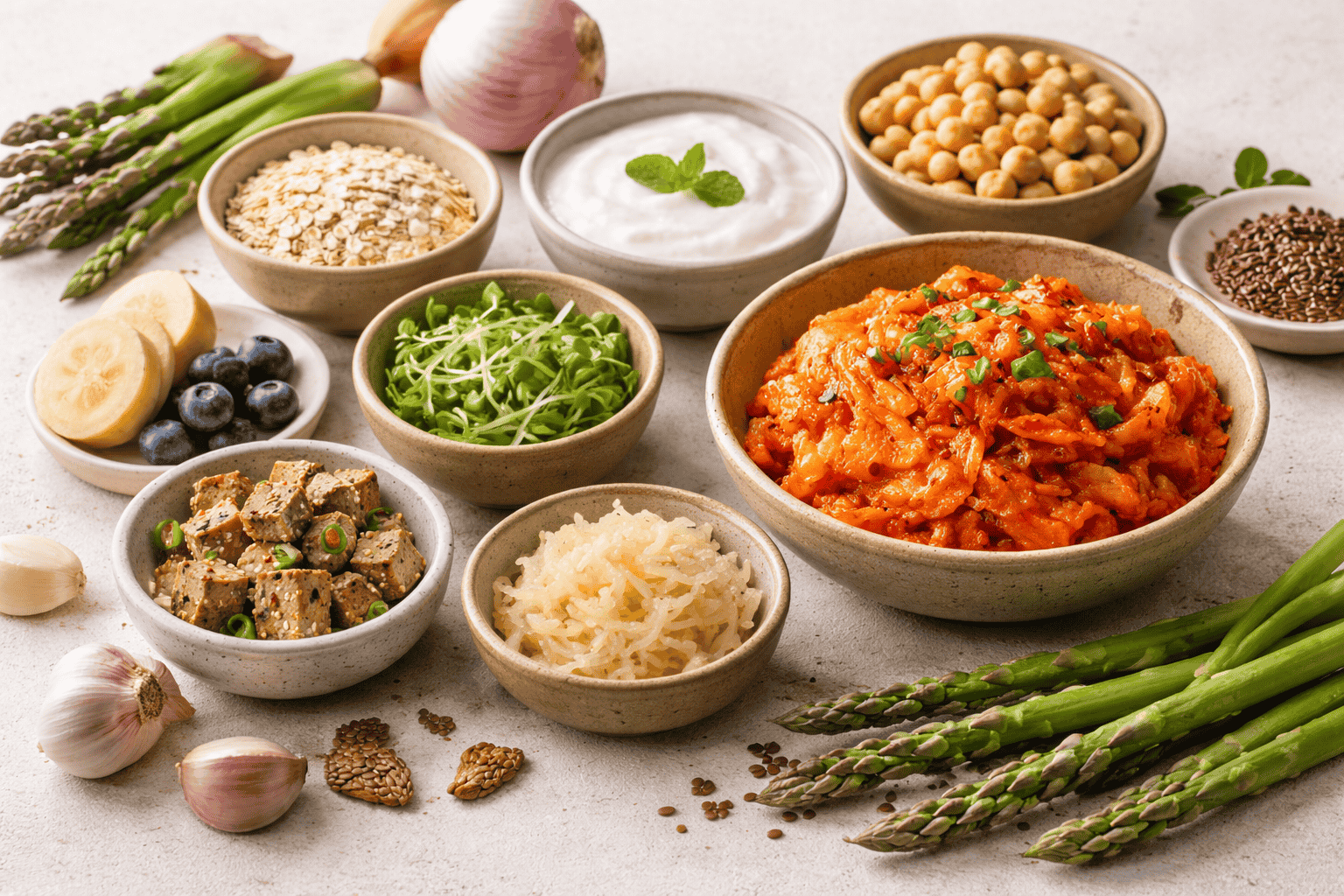
While probiotics are often associated with dairy products, the plant-based world offers plenty of delicious options. Some examples of plant-based probiotic-rich foods include:
- Fermented vegetables: Sauerkraut, kimchi, pickles (naturally fermented)
- Plant-based yogurts: Made from coconut, almond, or soy milk
- Miso: A fermented soybean paste used in soups and sauces
- Tempeh: Fermented soybeans pressed into a cake
- Kombucha: A fizzy fermented tea
Adding these foods to your diet regularly can help maintain a diverse and balanced gut microbiome, which may improve digestion, reduce inflammation, and support nutrient absorption.
What Are Prebiotics?
If probiotics are the “good soldiers,” then prebiotics are their fuel. Prebiotics are non-digestible fibers that pass through the digestive system and serve as food for beneficial gut bacteria. By feeding the probiotics, prebiotics help them thrive and multiply, creating a healthier gut environment.
Plant-based prebiotic sources are abundant and versatile. Some of the most effective ones include:
- Fruits: Bananas, apples, pears, berries
- Vegetables: Onions, garlic, leeks, asparagus, Jerusalem artichokes
- Legumes: Lentils, chickpeas, beans
- Whole grains: Oats, barley, quinoa
Including prebiotics in your meals is as simple as tossing an apple into your morning oatmeal, roasting asparagus with your dinner, or enjoying a chickpea salad for lunch.
Probiotics vs. Prebiotics: What’s the Difference?
It’s easy to mix them up, but here’s a simple way to remember:
- Probiotics = live bacteria that directly populate your gut
- Prebiotics = food for bacteria that helps probiotics grow and thrive
In other words, probiotics are the beneficial bacteria themselves, while prebiotics are the nutrients that feed them. Together, they create a balanced and thriving gut microbiome, which is essential for overall health.
Why Your Gut Health Matters
A healthy gut is more than just comfortable digestion. It can influence:
- Immune function: A large part of your immune system resides in your gut
- Nutrient absorption: Proper gut function ensures your body efficiently absorbs vitamins and minerals
- Mood and mental health: Gut bacteria produce neurotransmitters like serotonin, which affect mood
- Weight management: A balanced microbiome helps regulate metabolism and cravings
Investing in your gut health is investing in your overall well-being. By combining probiotic-rich foods with fiber-packed prebiotics, you provide your gut with everything it needs to thrive.
How to Incorporate Both into Your Plant-Based Diet
Here’s a simple way to include both in your daily meals:
- Breakfast: Oatmeal topped with banana slices and a dollop of coconut yogurt
- Lunch: Lentil salad with chopped onions, garlic, and a side of sauerkraut
- Snack: Apple slices with almond butter
- Dinner: Stir-fried tempeh with asparagus and leeks
This approach ensures that your gut bacteria receive a variety of foods that both nourish and support them. Over time, you’ll likely notice improved digestion, more energy, and a greater sense of well-being.
Final Thoughts
Probiotics and prebiotics are not just trendy buzzwords, they are essential components of a healthy, plant-based lifestyle. By including fermented foods and fiber-rich plants in your daily diet, you can cultivate a thriving gut microbiome that supports your digestion, immunity, and overall health. The next time you enjoy a tangy bite of kimchi or a creamy spoonful of coconut yogurt, remember you’re feeding your gut the good bacteria it needs to flourish.