
For thousands of years, herbs and spices have been used not only to season food, but to heal, strengthen, and protect the body. Ancient cultures understood their power long before modern science could explain it, and today, research continues to confirm what tradition always knew.
Herbs and spices do far more than add flavor. Each leaf, root, seed, and bark contains hundreds of natural compounds that influence immunity, digestion, hormones, the nervous system, circulation, inflammation, and even cellular repair.
What appears to be a simple sprig of rosemary or pinch of ginger is actually a concentrated dose of plant chemistry designed by nature to protect, restore, and nourish the human body at every level.
Let’s break down the science behind how herbs and spices work, and why your kitchen may be one of the most powerful healing spaces in your home.
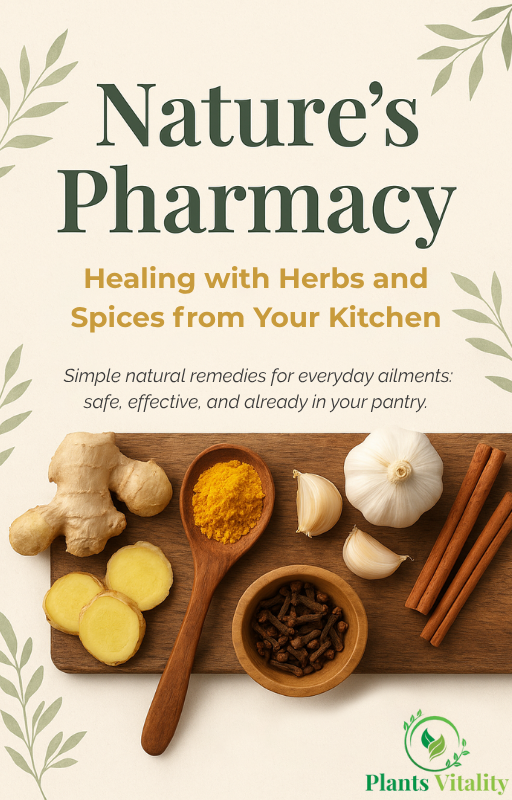
📖 Nature’s Pharmacy
Preorder now and enjoy our Early Bird Special before launch day on December 6th!
Discover 50+ natural herbal remedies made from everyday kitchen ingredients.
Why Herbs and Spices Are Powerful: The Science
Plants produce special chemicals called phytonutrients. These aren’t vitamins or minerals; they are highly active compounds that plants create to protect themselves from infection, pests, and stress.
When humans consume those same compounds, they offer similar protection in our bodies.
Some of the most important include:
⭐ Polyphenols
Fight inflammation, protect cells, support heart and brain health. Found in cloves, cinnamon, oregano.
⭐ Flavonoids
Antioxidants that reduce oxidative stress and support immunity. Found in parsley, thyme, sage, mint.
⭐ Terpenes
Aromatic compounds that fight microbes and support the respiratory system. Found in rosemary, eucalyptus, basil.
⭐ Alkaloids
Powerful chemical defenders: some stimulate digestion, others calm nerves. Found in black pepper, ginger, turmeric.
⭐ Sulfur Compounds
Potent immune-boosters and detoxifiers. Found in garlic, onions, mustard seeds.
These natural compounds act like microscopic warriors inside your body; fighting inflammation, improving blood flow, killing harmful microbes, and energizing your cells.
How Herbs and Spices Travel Through the Body
Once consumed, herbs and spices follow a specific pathway:
1. Digestion – Release of Active Compounds
Chewing or cutting herbs releases essential oils.
Heat from cooking activates aromatic compounds like gingerols and curcumin.
2. Absorption in the Small Intestine
Phytonutrients enter the bloodstream through intestinal walls.
Healthy gut bacteria also “unlock” herbal compounds and increase their potency.
3. Distribution Through the Bloodstream
Your blood carries plant chemicals to every organ:
- Antioxidants circulate and reduce inflammation
- Antiviral compounds support immune cells
- Terpenes reach the lungs
- Polyphenols protect the heart and vessels
- Alkaloids stimulate digestion and metabolism
4. Liver Processing
The liver breaks these compounds into forms your body can use and protects organs from toxins.
5. Cellular Impact
Once inside cells, herbal compounds can:
- Repair DNA
- Protect membranes
- Reduce internal inflammation
- Support antioxidant enzymes
- Activate detoxification pathways
This is why herbs and spices don’t just make you feel better, they physically change the chemistry of your body.
What Herbs and Spices Do for Each Organ
❤️ Heart and Blood Vessels
- Cinnamon lowers blood sugar and inflammation
- Garlic improves blood flow and reduces clotting
- Turmeric protects artery walls
🧠 Brain and Nervous System
- Rosemary increases circulation to the brain
- Sage improves memory retention
- Ginger enhances oxygen delivery
🌬 Lungs and Respiratory System
- Thyme breaks down mucus
- Oregano kills respiratory bacteria
- Black pepper opens airways
🧘🏽♀️ Digestive System
- Mint relaxes intestinal muscles
- Cumin boosts digestive enzymes
- Fennel reduces bloating
🩺 Liver and Detoxification Pathways
- Turmeric activates detox enzymes
- Dandelion stimulates bile flow
- Rosemary protects liver cells
🦠 Immune System
Plant compounds support white blood cells and fight viruses, bacteria, fungi, and inflammation, all naturally.
Herbs vs. Spices: Scientific Differences
| Herbs | Spices |
|---|
| Leaves & soft stems | Roots, seeds, bark, berries |
| Mild to aromatic | Strong, warm, potent |
| Best fresh or gently dried | Typically dried |
| Examples: basil, mint, thyme | Examples: turmeric, ginger, cinnamon |
Herbs nourish gently.
Spices heal powerfully.
Both are necessary for whole-body wellness.
Best Spice Blends for Organ Support
1. Immunity Blend
- Turmeric
- Ginger
- Black pepper
- Garlic powder
2. Digestive Blend
- Cumin
- Coriander
- Fennel
- Cardamom
3. Brain and Focus Blend
- Rosemary
- Lemon peel
- Sage
4. Heart-Health Blend
- Cinnamon
- Garlic
- Cayenne (a tiny pinch)
These blends activate organ-specific pathways and help create daily healing.
How to Dry Herbs Correctly (So They Don’t Rot)
Drying preserves herbal oils and medicinal compounds but only if done properly.
1. Air-Drying (Best for hardy herbs)
Perfect for: thyme, rosemary, oregano.
- Tie small bundles
- Hang upside down in a warm, dry place
⚠ In cold seasons?
Air-drying can work, but only if your home is dry.
If humidity is high, herbs may mold instead of dry.
2. Sun-Drying (Not recommended)
Sunlight destroys essential oils, the very medicine you want to preserve.
3. Low-Heat Drying (Best method)
Use a dehydrator or oven at 35–45°C (95–113°F). Preserves color, oils, and potency.
4. Countertop Drying
Spread on a tray with airflow.
Turn daily.
Better for leaves; not ideal for roots.
How to Know Herbs Went Bad:
- Soft or slimy
- Gray, black, or white spots
- Musty smell
- Still “wet” after several days
If so, discard.
Final Thoughts
Herbs and spices are not just seasonings; they are powerful healing tools.
Every time you use them, you strengthen your organs, feed your cells, support detoxification, and build long-term immunity.
They remind us that the simplest forms of healing have always been in the kitchen waiting for us to rediscover them.